
TREATMENT METHODS
Dry needling in Poznań: precise trigger point release
A Western physiotherapy technique grounded in anatomy and neurophysiology. Thin sterile needles are inserted into muscle trigger points to release tension immediately.
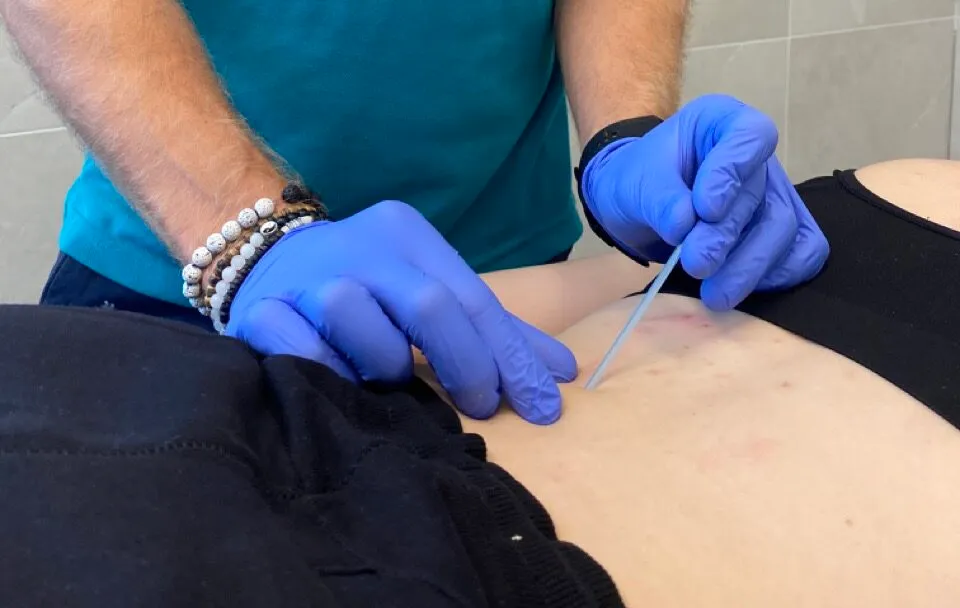
What is dry needling?
Dry needling in Poznan is a physiotherapy technique that releases muscle
trigger points using thin sterile needles. Unlike acupuncture, it is based
on functional anatomy and orthopaedic diagnostics, not on meridians. It
works where standard massage cannot reach and is offered by an
English-speaking physiotherapist at the GraMedica clinic.
Dry needling is a modern musculoskeletal therapy technique grounded in
anatomy and neurophysiology. Thin sterile needles are inserted precisely
into deep tissue layers (muscles, fascia, and trigger points) to release
tension, improve circulation, and restore tissue function.
How it differs from acupuncture. Both techniques use needles, but they
are fundamentally different approaches. Acupuncture comes from Chinese
medicine and works on meridians and Qi flow. Dry needling is strictly a
medical technique: based on functional anatomy and orthopaedic-neurological
diagnostics, targeting specific trigger points in tense muscles.
The twitch response. A key element of the method. After precise insertion
into a trigger point, a local involuntary muscle twitch occurs, confirming
the needle has reached the pathological tight band. The twitch:
- speeds up release of the tense structure
- clears accumulated inflammatory substances
- improves microcirculation in the treated area
What a session looks like. Each session starts with intake and movement
testing to localise the source of pain. Then I insert the needles. You may
feel light pricking, tension, and at the moment of twitch a brief muscle
jolt. After the session a mild muscle ache or "DOMS-like" feeling often
appears for 24–48 hours, a natural recovery response.
Pinoterapia (pin therapy) as a variant. In selected cases I combine dry
needling with pinoterapia, a Polish technique using very short pins for
surface-level point stimulation. Less invasive, particularly useful for
sensitive areas or patients anxious about standard dry needling.
Safety. Classified as invasive (skin penetration), but performed by a
trained therapist it is safe and well-tolerated. Single-use sterile
needles. Growing research evidence supports dry needling for pain reduction
and improved muscle function.
INDICATIONS
When I use dry needling
Spine pain
Neck, shoulder, back, particularly when clear trigger points are present.
Overuse syndromes
Tennis elbow, runner's knee, plantar fasciitis, ITBS, shin splints.
Migraines and headaches
Tension and migraine headaches often respond to neck and shoulder muscle work.
Nerve compression syndromes
Carpal tunnel, sciatica, neuralgia. Dry needling as part of treatment.
Sports injuries
Post-injury range-of-motion restrictions, tension after intense training.
Chronic muscle tension
Where massage and manual physiotherapy give superficial or slow results.
Common questions about dry needling
Does dry needling hurt?
Is dry needling the same as acupuncture?
How many sessions are needed?
Are there contraindications?
Can I exercise after dry needling?
Related treatment methods
I often combine dry needling with these techniques in the same visit or series.
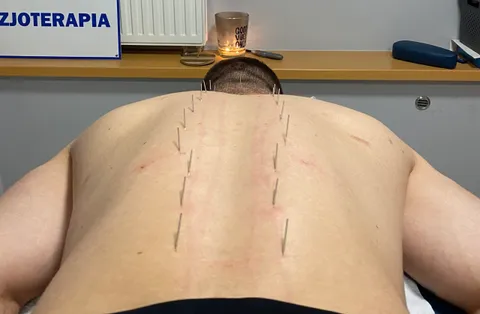
Acupuncture in Poznań: Chinese medicine in clinical practice
Acupuncture, a different logic with the same tool. Used when systemic effect is needed, not just local release.
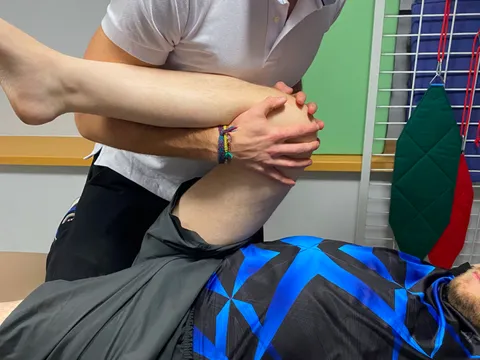
Manual therapy in Poznań: the foundation of every visit
Manual joint and muscle work, the foundation of every visit. Dry needling adds reinforcement.
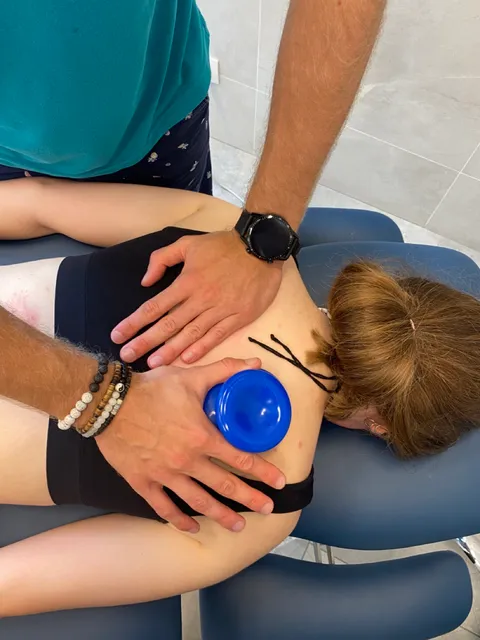
Soft tissue techniques in Poznań: tension, scars, and fascia
IASTM, deep tissue, taping. Complement dry needling in fascial work and scar mobilisation.
Book a dry needling session
No referral, no waiting lists. The first visit is a complete assessment and plan. Dry needling only when I see it will give a concrete benefit.
Book a visit