
TREATMENT METHODS
Medical training in Poznań: learn how not to come back with the same problem
Good physiotherapy ends in the clinic. Good rehabilitation starts with what you do outside it. Every patient gets an individual exercise plan tailored to the problem, fitness level, and lifestyle.
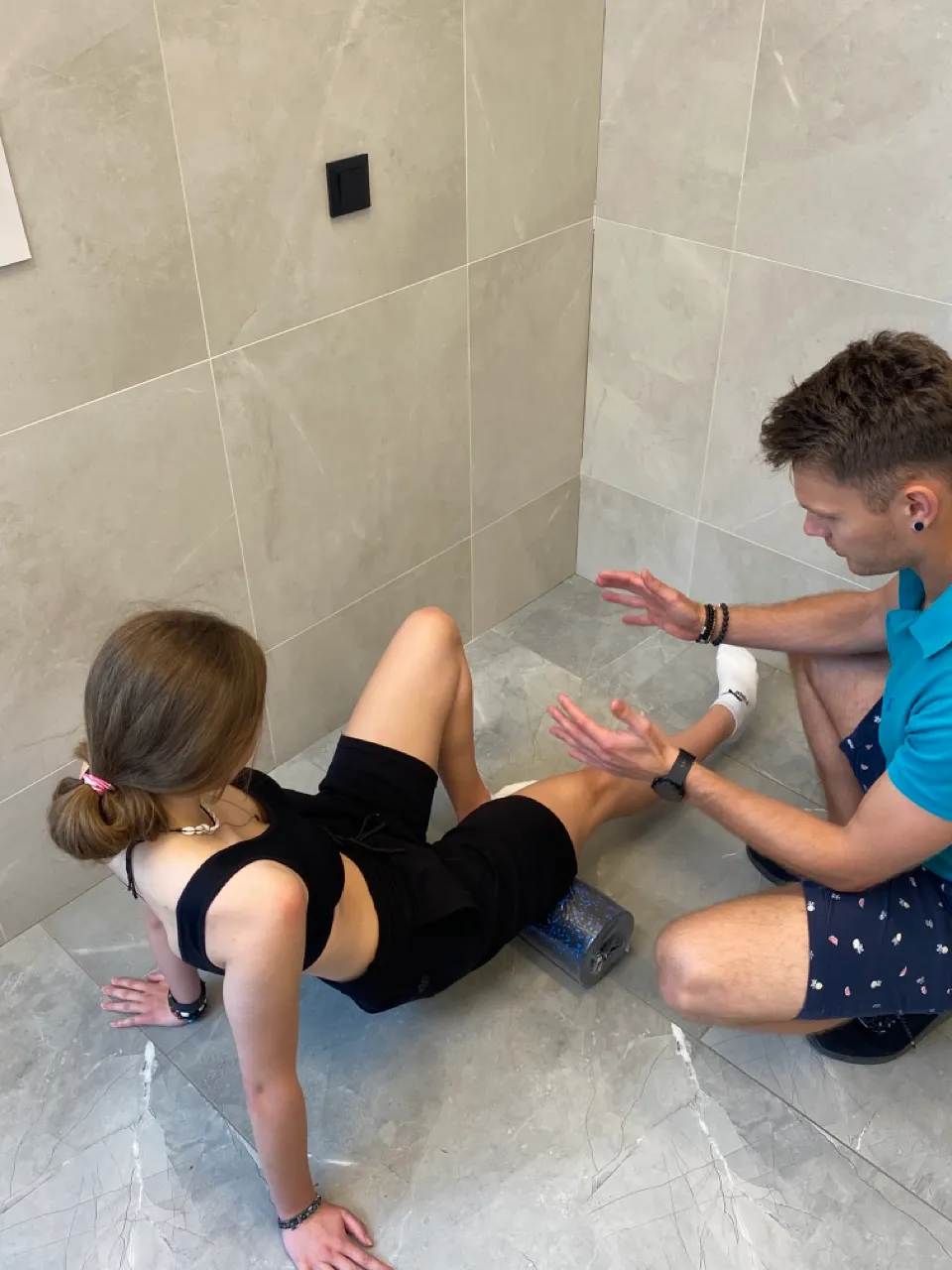
Medical training, what it means in practice
Medical training isn't standard "exercises from the internet." These are
specific movement tasks tailored to your problem, your fitness level,
and your lifestyle. Fifteen years of clinical practice (including with
Polish and Chinese national teams at Tokyo 2021) led to one observation:
rehabilitation works only when the patient understands what they're doing
and why.
Three layers of the plan you receive:
- Exercises in the clinic under my eye, with immediate technique
correction. Every visit ends with showing you a movement to take home. - Home plan, a set of 3–8 exercises you do between visits. Short,
specific, doable in home conditions. No equipment or minimal equipment
(mat, band, dumbbells). - In the PRO Session you receive a PDF plan and video. Exercises are
recorded on video featuring you. You see exactly how to do them, at
your own pace, with proper technique. Plus a written PDF plan
describing each movement.
Who medical training is for:
- Post-injury patients (ACL, shoulder, spine, hip). Safe, evidence-based
return to function. - Recreational athletes (runners, gym-goers, cyclists, CrossFitters).
Return after injury, relapse prevention, technique optimisation. - Office workers with back, neck, shoulder pain from prolonged sitting.
Corrective exercises and workstation ergonomics. - Post-surgical patients receive a rehab protocol matched to healing
stage: range of motion, strength, motor control, return-to-sport.
Medical training vs general exercise. The difference:
| General exercise | Medical training |
|---|---|
| "One plan for everyone" | Plan tailored strictly to diagnosis |
| No technique correction | Every movement checked and corrected |
| Goal: general fitness | Goal: specific clinical problem |
| Open-ended pacing | Progression based on tissue response |
Movement education is integral. I explain in detail:
- what the movement should train and why
- how to recognise correct vs incorrect technique
- how to modify the exercise when it hurts
- when to increase load and when to back off
WHEN IT MATTERS
When medical training has the most value
Post-surgery
ACL, shoulder, spine, hip. Rehab protocol matched to healing stage.
Return to sport
Runners, gym-goers, CrossFitters. Safe loading, relapse prevention.
Office work
Back and neck pain from sitting. Corrective exercises and workstation ergonomics.
Injury prevention
Recreational athletes. Analysing movement patterns, strengthening weak links.
Chronic pain
Where passive therapy alone isn't enough, strengthening and education are the key.
Competitive athletes
Progression protocols available in the PRO Session for complex return-to-sport cases.
Common questions
How many exercises will I get?
Do I need a gym?
What exactly is the PRO Session?
What if an exercise hurts?
How long until I can return after an ACL?
Related treatment methods
Medical training is rarely the only tool. Most often I combine it with these.
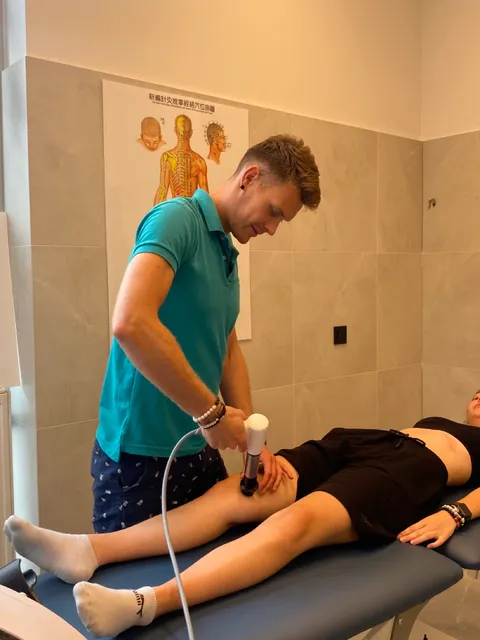
Patient education: leave the clinic with knowledge, not just relief
Patient education. Without understanding the problem the exercise plan stays on the shelf.
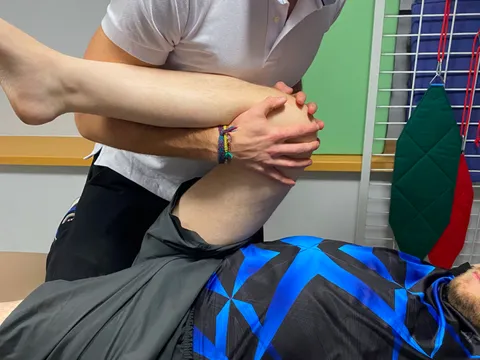
Manual therapy in Poznań: the foundation of every visit
Manual work before exercise releases tissue so movement becomes effective.
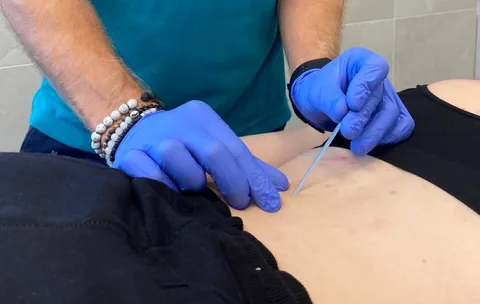
Dry needling in Poznań: precise trigger point release
Dry needling, when a trigger point blocks a specific movement pattern needed for progression.
Book a session with an exercise plan
Choose PRO Session if you want a complete PDF plan and video. Standard visit includes verbal plan and exercise demonstration.
Book PRO Session